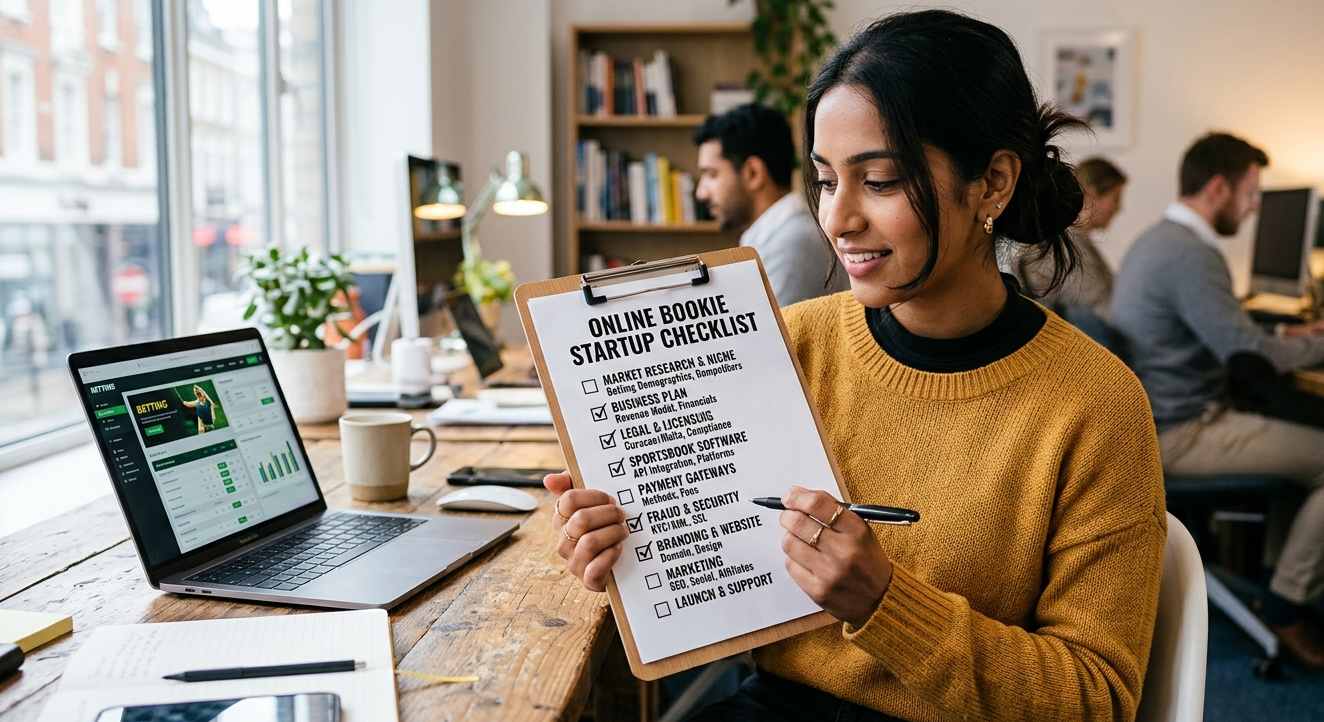
Most people who want to get into sports betting focus on the wrong things first. They think about the players they’ll bring in, the sports they’ll cover, and the money they’ll make. What they should be thinking about is infrastructure. Because the fastest way to fail in this business isn’t picking a bad game – it’s launching without the right foundation in place.
In 2026, running a legitimate sportsbook operation means having the right technology, a clear understanding of your legal environment, a plan for managing cash flow, and the discipline to treat it like a real business from day one. This checklist covers each of those areas plainly. If you can check every box before you take that first bet, you’re starting from a position of strength.
Understanding the Modern Bookie Business Model
The first thing to get clear on is how the money actually works. A lot of people enter the bookie business thinking they’re betting against their players – that every loss a player takes goes straight into their pocket. That’s not how a sustainable operation runs.
The modern bookie business model is a margin game, not a gambling game. Revenue comes from the vig – the commission built into every bet, typically between 5% and 10%. Over a full week of player activity across dozens of bets, that margin adds up consistently. You’re not trying to “beat” your players; you’re providing a service and earning on volume.
What makes this work in practice is automation. Today’s PPH platforms track every bet, grade every result, calculate every margin, and flag any unusual exposure – all in real time. The technology is what makes it possible to how to run a bookie business at scale without a full back-office team. Your job is to find good players, keep them engaged, and let the system handle the math.
What It Means to Become a Bookie in 2026
To become a bookie in 2026 is to take on the role of a digital operator – part customer service manager, part entrepreneur, part analyst. The underground image doesn’t apply here. This is a professional role in a structured, tech-driven industry.
Most people who become a bookie online today do so through the agent model. You work within an established platform that provides the odds, the risk infrastructure, and the player-facing interface. You handle the relationships – bringing players onto the platform, managing their accounts, ensuring they have a smooth experience from login to payout.
The appeal of the online model is obvious: no physical office, no geographic limits on your player base, and a platform that operates 24/7 without you being manually present for every bet. What you do need is consistency and professionalism. Players will judge your operation the same way they’d judge any service business – by reliability, responsiveness, and trust.
Essential Software and Technology You Need to Start
This is where most new operators underestimate what’s required. The right technology isn’t a nice-to-have – it’s the entire foundation of the business. If you’re figuring out how to start a sports bookie business, the software decision is the most consequential one you’ll make early on.
Here’s what a complete tech stack actually needs to cover:
- Bookie agent software – your command center. This is where you see every player’s balance, every open bet, your total exposure for the week, and your net margin. Without solid bookie agent software, you’re flying blind.
- Real-time odds feed – lines that update automatically based on market movement and live game data. Stale lines cost you money. Players notice immediately.
- Mobile-first interface – the overwhelming majority of bets in 2026 happen on mobile. If the platform isn’t clean and fast on a phone, you’ll lose players to someone whose platform is.
- Automated risk controls – the ability to set limits per player, adjust exposure on specific events, and flag sharp action before it becomes a problem.
PrimeTime PPH’s sportsbook platform covers all of these. Live betting across every major sport, a prop builder for player-specific markets, automated hold tools, and real-time dashboards – all accessible from a single login on any device. You also get casino games included – slots, live dealer tables, RNG games – at no additional cost per head. It’s the kind of setup that used to require a serious budget to build; now it runs on a flat $10/head weekly rate.
How Much Money Is Needed to Be a Bookie in 2026
The capital question is critical, and the honest answer is: it depends on your model, but less than most people assume.
When calculating how much money is needed to be a bookie in 2026, your budget needs to cover four things:
- Platform fees. On a PPH model, this is $10 per active player per week. Twenty players = $200/week. It scales with activity, so your overhead never outruns your revenue.
- Player acquisition. Whether you’re growing through word of mouth, social media, or small-scale outreach, budget a few hundred dollars per month for the first several months.
- Operating reserve. This is the part most people skip, and it’s the part that sinks them. Players have hot weeks. Parlays hit. You need a cash buffer that can handle a losing week without derailing operations. A reserve covering 4-6 weeks of potential net payout is a reasonable starting point.
- Licensing/compliance. If you’re in a regulated state and operating formally, legal fees and registration costs vary by jurisdiction. Know this number before you launch.
A realistic starting budget for a small PPH operation – 15 to 25 players – runs between $2,000 and $5,000 for the first quarter, including reserve. That’s a low barrier to entry compared to virtually any other service business. The FAQ page on PrimeTime PPH goes into detail on exactly what’s included at each stage.
Bookie Agent Systems and Online Business Models
The bookie agent system is the dominant model for independent operators in 2026 – and for good reason. Instead of building or licensing a full platform, you operate as an agent inside an established ecosystem. The parent platform manages the technology, line feeds, data security, and 24/7 uptime. You manage your players.
This structure works at any scale. You can start with five players and grow to five hundred using the same underlying system, with no infrastructure changes required. Running a successful online bookie business doesn’t require a development team or a trading desk. It requires good players, good service, and a platform that doesn’t let you down on game day.
For operators considering how to start a bookie business this way, the ramp-up time is minimal. PrimeTime PPH offers same-day onboarding in most cases. Book a demo to walk through the platform before committing – it’s the fastest way to evaluate whether it fits your operation.

How to Be a Successful Bookie in a Competitive Market
Understanding how to be a successful bookie comes down to a few operational disciplines that separate the agents who grow from the ones who plateau.
- Uptime is non-negotiable. An hour of downtime during a primetime game can cost you, players, permanently. Your platform needs to be rock-solid, especially during peak periods.
- Monitor your book actively. Watch for patterns – a player who consistently wins at a high rate deserves attention. Not to cut them off arbitrarily, but to understand where your exposure is concentrated and adjust accordingly.
- Retention beats acquisition every time. It’s cheaper and easier to keep an existing player happy than to find a new one. Smooth payouts, a responsive interface, and ease of reach go a long way.
- Know your calendar. NFL season, March Madness, major boxing and MMA events – these are your revenue peaks. Plan your player outreach and your reserve accordingly.
This is what how to run a bookie business like a real company actually looks like in practice. Check your dashboard daily and read your weekly reports. Stay on top of what’s happening in the sports calendar.
How to Be a Good Bookie: Customer Experience and Operations
The final piece of the checklist is the one that compounds over time: reputation. In this business, your reputation is your most valuable asset and your cheapest form of marketing. Every player who trusts you becomes a referral source.
Understanding how to be a good bookie comes down to three things players actually care about:
- Fast, consistent payouts. Nothing builds trust faster. Nothing destroys it faster than a slow or complicated payout. Your platform should make this process clean and simple.
- Clear, accessible rules. Players need to know what they’re agreeing to. Transparent terms aren’t just ethical – they prevent disputes that cost you time and relationships.
- Real support when it matters. PrimeTime PPH includes 24/7 bilingual support (English and Spanish) at no additional cost. When a player has a question at 11 pm during a game, someone picks up the phone.
If how to start a sports bookie business is the question you walked in with, this is the answer you leave with: build the right foundation, choose technology that works while you sleep, manage your margins with discipline, and treat your players the way you’d want to be treated as a customer.Ready to get started? Sign up with PrimeTime PPH – no minimums, no long-term contracts, and a platform that gives your online bookie business everything it needs to run from day one.