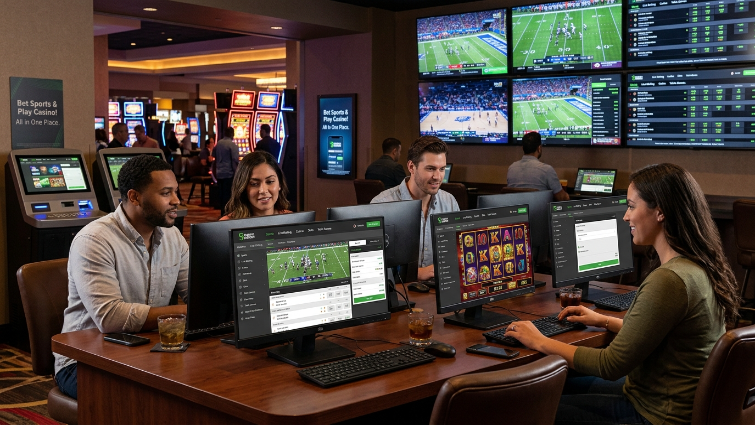
There’s a moment most sportsbook operators eventually hit: handle is solid, players are active during game weeks, and everything feels stable. Then you pull up the calendar and realize three weeks have NFL byes, the NBA isn’t fully in gear yet, and your weekly revenue quietly dropped by a third for no reason you can control.
The operators who handle that gap consistently are the ones who’ve already decided to add casino to sportsbook operations – not as an afterthought bolted on at the end, but as a second revenue engine running in parallel with sports. A properly integrated sportsbook casino product won’t just fill the dead weeks. It will generate 30-40% more revenue from the players you already have, without acquiring a single new account.
Here’s how it actually works, and how to get it right.
Why a Casino Multiplies Your Sportsbook’s Earning Power
Sports betting is fundamentally tied to a calendar. The NFL runs Thursday through Monday. The NBA has off-nights. MLB has long stretches where your specific players just aren’t that engaged with the matchups. The result is a sportsbook that performs in bursts – strong weeks when everything lines up, quiet weeks when nothing does.
The casino sportsbook model breaks that pattern. Slots don’t have a schedule. Live dealer tables run at 2 am on Wednesdays just as well as they do during Sunday Night Football. The player who bet $200 on the weekend doesn’t have to disappear; they find something else to do inside your ecosystem rather than going somewhere else entirely.
The economics are just as compelling. Standard sports betting generates a hold of 5-7% on a typical straight bet. Online casino software products (especially slots and live dealer games) have a 15-25% hold on the same dollar. That math changes your monthly bottom line significantly, even when player count stays flat.
Which Casino Games Actually Drive Revenue
This is where a lot of operators waste budget – loading up on hundreds of niche titles because a large catalog looks impressive, while actual handle concentrates in about a dozen games.
In practice, online casino gaming software revenue breaks down predictably: slots generate 60-70% of casino handle for most operators. They’re easy for casual players, they work natively on mobile, and the hold is consistently high. A bettor who placed a morning wager on a college game can be in a slot session by halftime without thinking about it.
Live dealer blackjack and roulette sit in second place and punch above their weight in session length. There’s something about a real dealer on screen that keeps high-value players at the table far longer than RNG games do. This is worth understanding before you finalize your game mix: our blog post on why live dealer casinos boost player retention explains exactly why those sessions run longer and what it means for lifetime player value.
The practical takeaway: invest in a deep slot library and solid live dealer tables. Everything else is the supporting cast.
Build, Buy, or White Label – Choosing the Right Casino Software Path
This decision determines your launch timeline, upfront costs, and how much flexibility you’ll actually have once you’re live. It’s also where agents most often overcomplicate the analysis.
Online casino software development from scratch makes sense for roughly the top 1% of sportsbook operators – the ones with dedicated technical teams, serious capital reserves, and a real operational reason to own every layer of the tech stack. For everyone else, it’s an expensive multi-year project that doesn’t improve a single player’s experience. The reality of custom online casino software development is that you’ll spend more time managing infrastructure than running a book.
The practical decision for most operators comes down to three paths:
- Licensed software is when you buy online casino software as an existing product with a licensing model. More direct control than a fully hosted solution, but you still need technical resources to handle maintenance, updates, and support. A reasonable middle path for operators with some internal technical capacity.
- White-label online casino software is the most common choice among growing sportsbooks for good reason. You get a fully operational product under your own brand without building anything from the ground up. Fast to launch, no development overhead, and the provider handles the maintenance cycle.
- Turnkey online casino software goes one step further: games, payment integrations, reporting, and support infrastructure are pre-built into a complete package. Configure it for your operation and launch. This is what most PPH-based books actually use in practice, because the setup timeline is days rather than months, and the operational complexity is minimal.
For the vast majority of independent operators, the decision to buy online casino software through a white-label or turnkey model is the right one. The economics are clear, and the launch risk is manageable.
What to Look for in a Casino Software Provider
Picking the wrong online casino software provider costs more than money; it costs player trust, which is considerably harder to rebuild than a balance sheet.
The practical checklist: a minimum of 200+ slot titles from recognizable, named game studios. Not “premium content partners,” but actual studios with certified RNG and a track record. Mobile performance should be native-quality on iOS and Android, because that’s where most casino sessions happen. Online casino gaming software should deliver unified reporting: slots handle, live dealer handle, and total player value, all on the same dashboard alongside your sports numbers.
Red Flags in Online Casino Software Providers
Among online casino software providers, the gap between genuine infrastructure and a polished sales deck can be hard to spot from the outside. A few warning signs that should end a conversation before it goes further:
If a provider hesitates on specific RNG certifications or licensing details, that’s a hard stop. Reputable companies show this information upfront and willingly. If they can’t name the game studios in their catalog (or reference “top-tier partners” without specifics), the content library is thin. Slow responses during the sales process are almost always a preview of slower support after you’re live.
Casino online software priced dramatically below market is a signal, not a bargain. The discount usually comes from somewhere: unstable uptime, weak reporting, or integration quality that creates problems during your busiest weeks.
And if a provider won’t give you demo access to test the platform before you sign anything, walk away. Any legitimate casino online software solution worth operating on will let you evaluate the product first.
Integrating the Casino with Your PPH Sportsbook
Even excellent bookie casino software underperforms when integration is treated as an afterthought. The most common failure mode isn’t a bad product; it’s two technically separate products sharing a brand name. Different logins, different wallets, different interfaces. Players notice the friction and don’t cross over.
Proper integration means one wallet across both verticals. A player’s sportsbook balance and casino balance are the same number. One login handles both. Your reporting gives you the full view (sports handle, casino handle, and total player value) in a single dashboard rather than two separate systems you have to reconcile manually.
This is what PPH casino software built into a platform like PrimeTime actually delivers. The casino isn’t added on; it’s part of the same ecosystem, running under the same single-login experience your players already use. You can see the full casino product setup on our casino features page.
When you add a casino to sportsbook operations correctly – as a genuinely integrated product rather than a separate module players have to find on their own – the revenue lift is measurable within weeks. Players who have never touched a casino before start exploring. Session lengths increase. Weekly handle from your existing base goes up without a single new player acquisition.

Launch the Casino Right and Hit That 30-40% Revenue Lift
Operators who deploy online casino software and quietly flip a switch rarely see strong early numbers. The ones who treat it like a real product launch – with active communication, promotional offers, and performance tracking – consistently hit that 30-40% revenue lift within the first few months.
The sequence that works:
- Tell your players clearly. SMS, email, and in-platform notification. Make it obvious what’s new and give them a specific reason to try it – a free spins offer, a match bonus on first deposit, something that removes the barrier to the first click. Players who don’t know the feature exists won’t use it. That sounds obvious, but a significant number of flat casino launches come down to exactly that assumption.
- Time it right. Launching your sportsbook casino during a lighter sports period – the NFL offseason, a slow stretch in the regular season schedule – forces players to engage with the casino product on its own terms. First impressions from that context tend to stick.
- Track the first 30-60 days closely. Who converted? Which games moved the handle? Which players have the highest cross-vertical value? That data tells you exactly where to focus retention efforts and where the revenue ceiling actually sits for your player base. The broader principles behind how integrated platforms create these upsell windows are covered in detail in our post on how price per head software works – the mechanics translate directly to casino rollout.
The full infrastructure to execute this – integrated online casino software, automated reporting, single-wallet experience, live dealer, and 24/7 bilingual support – is already inside the PrimeTime platform at the same flat $10-per-head rate. No separate casino pricing, no surprise fees.If you’re ready to add the vertical, reach out to the PrimeTime team, and most agents are live within 24 hours.